

California Traumatic Brain Injury Lawyer: Proving Invisible Injuries and Lifetime Damages

HOME › CALIFORNIA PERSONAL INJURY › CATASTROPHIC INJURY › TRAUMATIC BRAIN INJURY
Last updated: April 2026 — Reflects California Code of Civil Procedure §§ 335.1 and 340.5, Civil Code §§ 3294 and 3333.2 (MICRA), Centers for Disease Control and Prevention TBI classification and data, controlling authority on brain injury proof and damages, and the AB 35 MICRA schedule effective as of January 1, 2026
Traumatic brain injury is the most commonly litigated category of catastrophic injury in California personal injury practice, and also the most commonly contested.
A TBI can result from any blow or jolt to the head — motor vehicle crashes, falls from height, sports impacts, workplace strikes, assaults, and blast exposure — and produces a spectrum of outcomes from transient concussion to permanent vegetative state.
The Centers for Disease Control and Prevention classifies TBI severity using the Glasgow Coma Scale and imaging findings, with approximately 75% of all TBIs falling into the "mild" category, 15% into the "moderate" category, and 10% into the "severe" category.
The distinctive litigation challenge is that many TBIs, particularly mild TBIs with significant long-term consequences, do not appear on standard CT scans and routine MRIs.
The injured person may present clinically with documented cognitive deficits, memory problems, personality changes, and functional impairment, while the defense relies on "normal" imaging to argue the plaintiff is exaggerating or fabricating symptoms.
Successful California TBI cases are built on a specific evidence architecture — neuropsychological testing, advanced imaging techniques such as diffusion tensor imaging, careful documentation by treating physicians, and life care plans projecting decades of future costs.
For the broader catastrophic injury framework, see California Catastrophic Injury.
TBI Classification and the Proof Problem
The severity of a traumatic brain injury is classified primarily by the Glasgow Coma Scale (GCS) score at initial presentation, combined with loss of consciousness duration, post-traumatic amnesia duration, and imaging findings.
Understanding the classification matters because the evidence strategy differs sharply between severity levels.
CDC Traumatic Brain Injury Severity Classification
Severity | Glasgow Coma Scale | Loss of Consciousness | Post-Traumatic Amnesia | Imaging |
Mild TBI (concussion) | 13–15 | 0 to 30 minutes | 0 to 24 hours | Usually normal on CT and standard MRI |
Moderate TBI | 9–12 | 30 minutes to 24 hours | 1 to 7 days | Often positive on CT or standard MRI |
Severe TBI | 3–8 | Greater than 24 hours | Greater than 7 days | Usually positive on CT; may include hemorrhage, contusion, or diffuse axonal injury |
Severe TBI cases are rarely contested on the existence of injury; the GCS, imaging, and clinical course typically establish causation and severity clearly. The contested questions focus on damages — the scope of the life care plan, cognitive rehabilitation projections, and prognosis.
Moderate TBI cases present intermediate issues with proof. Imaging is frequently positive, but long-term functional outcomes are variable. Defense counsel may argue the imaging findings do not correspond to claimed cognitive deficits, or that prior cognitive limitations account for current impairment.
Mild TBI is where California brain injury litigation is most contested. Standard CT and MRI are typically normal.
The plaintiff presents with post-concussive symptoms — cognitive slowing, memory difficulty, headaches, emotional dysregulation, sleep disturbance, light and sound sensitivity — that defense counsel routinely attributes to somatoform disorder, depression, litigation incentive, or pre-existing conditions.
The evidence architecture for a mild TBI case must overcome the "normal imaging" framing by documenting the cognitive deficits through other means.
Neuropsychological Testing
Neuropsychological testing is the foundation for proof of cognitive deficits in California TBI cases. A neuropsychologist administers a battery of standardized tests measuring attention, processing speed, memory, executive function, language, and emotional regulation.
The results are compared against normative data adjusted for age, education, and demographic factors, producing quantified performance scores across cognitive domains.
Proper neuropsychological testing includes validity measures — performance validity tests that detect effort and exaggeration. When a plaintiff's performance validity scores are within normal limits, defense arguments that the plaintiff is fabricating or exaggerating symptoms lose traction.
When validity scores are abnormal, the entire cognitive testing battery is undermined. Selecting a neuropsychologist experienced in forensic testing — one who routinely administers validity measures and understands the applicable litigation standards — is a central case-strategy decision.
Neuropsychological testing should be performed at appropriate intervals during the injury course. A baseline evaluation during the acute period documents initial deficits. A follow-up evaluation at 6 to 12 months post-injury documents the natural recovery trajectory.
A final evaluation at 18 to 24 months post-injury documents persistent deficits after maximum expected recovery. This temporal pattern — initial deficits, partial recovery, permanent residual impairment — supports the causation case and the life care plan projection.
Advanced Imaging Techniques
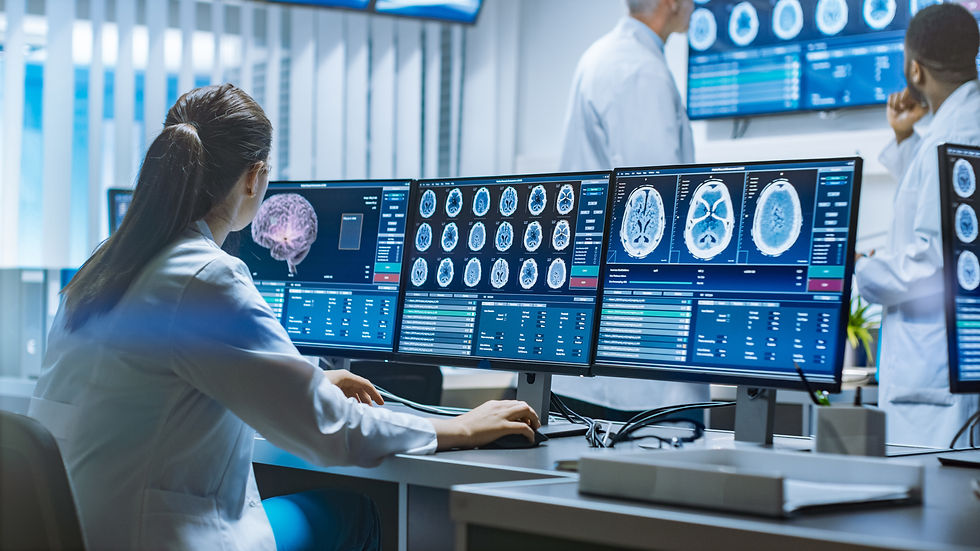
Standard CT and MRI often fail to show the microstructural damage characteristic of mild and moderate TBI. Advanced imaging techniques available at major California medical centers can document underlying injury even when conventional imaging is normal.
Diffusion Tensor Imaging (DTI) is an MRI technique that measures the directional movement of water molecules in white matter tracts. Traumatic brain injury damages the white matter through diffuse axonal injury — microscopic shearing of axonal fibers caused by rotational forces.
DTI can quantify this damage using metrics such as fractional anisotropy (FA) and mean diffusivity (MD), providing visual and numerical evidence of injury that standard MRI cannot show. DTI has gained acceptance in federal and state courts, including California, as a scientifically reliable basis for documenting TBI.
Positron Emission Tomography (PET) scans measure metabolic function in different brain regions. Areas of the brain damaged by TBI often show reduced metabolism even when structural imaging is normal. PET findings provide additional objective evidence of brain dysfunction in support of the clinical presentation.
Functional MRI (fMRI) measures changes in blood flow in the brain during specific cognitive tasks, documenting altered brain function associated with post-TBI cognitive deficits. fMRI is more technically demanding and less commonly used than DTI or PET in current California TBI practice.
Susceptibility-Weighted Imaging (SWI) is a specialized MRI sequence sensitive to small amounts of blood and iron deposits. SWI can detect microhemorrhages characteristic of diffuse axonal injury that are invisible on standard T1, T2, and FLAIR MRI sequences.
Not every TBI case requires advanced imaging — the severity of the presentation, the strength of the neuropsychological evidence, and available insurance coverage all factor into the decision.
When mild TBI is contested and standard imaging is normal, DTI and PET findings can substantially shift settlement dynamics.
Economic Damages and Life Care Planning
Severe and moderate TBI cases routinely produce economic damages in the millions to tens of millions. The life care planner's projection typically includes:
Ongoing medical care: neurology follow-up, rehabilitation physiatry, psychiatric treatment for mood and behavioral sequelae, and primary care coordination. Severe TBI patients commonly require complex ongoing medical management for life.
Cognitive and physical rehabilitation: speech and language therapy, occupational therapy, physical therapy, and cognitive rehabilitation services. Rehabilitation needs are most intense in the first 24 months post-injury but often continue at lower intensity for the plaintiff's lifetime.
Attendant care: in severe TBI cases, daily attendant care for safety supervision, medication management, transportation, and activities of daily living. Attendant care costs at California rates routinely exceed $200,000 annually for 24-hour coverage.
Assistive technology and home modifications: communication devices, mobility assistance technology, home accessibility modifications, and adaptive vehicle conversions.
Medications: anti-seizure medications (post-traumatic epilepsy occurs in a substantial fraction of severe TBI patients), psychiatric medications for depression and anxiety, pain management medications, and sleep medications.
Vocational impact: reduced earning capacity or inability to work at all. The vocational expert compares the plaintiff's projected pre-injury earning trajectory against the post-injury functional capacity, quantifying the present value of lost earnings over the remaining work life expectancy.
A life care plan for a 35-year-old with severe TBI typically runs $5 million to $15 million in projected future costs, before lost earning capacity and non-economic damages are added.
Mild TBI life care plans are substantially smaller but still often produce $500,000 to $2 million in projected costs when persistent cognitive deficits affect employment and require ongoing therapeutic support.
For the broader catastrophic injury damages framework and the discussion of future damages, see California Catastrophic Injury.
Non-Economic Damages and Caps
California imposes no statutory cap on non-economic damages in ordinary TBI cases. A jury can award whatever amount it determines is reasonable for pain and suffering, emotional distress, loss of enjoyment of life, disfigurement, and loss of consortium for the injured person's spouse.
California juries have returned substantial non-economic verdicts in TBI cases involving young victims with severe permanent impairment.
The one significant exception is medical malpractice. Under Civil Code § 3333.2, non-economic damages in medical malpractice cases are capped under the revised MICRA framework enacted by AB 35.
As of January 1, 2026, the MICRA non-economic cap is $470,000 for non-death cases and $650,000 for wrongful death cases, with scheduled annual increases of $40,000 (non-death) and $50,000 (wrongful death) until the caps reach $750,000 and $1,000,000, respectively, in 2033.
MICRA affects only medical malpractice-based TBI claims — typically brain injuries caused by surgical errors, anesthesia complications, missed diagnoses of stroke or cerebral hemorrhage, and medication errors.
TBI cases arising from motor vehicle crashes, falls, assaults, and product defects are not subject to MICRA.
Economic damages in medical malpractice TBI cases remain uncapped, which preserves the bulk of severe TBI recovery even under the MICRA framework.
Cap stacking under AB 35 can apply in multi-defendant malpractice cases — separate caps against the physician, the hospital, and unaffiliated providers — which effectively triples the non-economic ceiling in qualifying cases.
Punitive damages under Civil Code § 3294 are available in TBI cases involving malicious or oppressive conduct — DUI crashes, manufacturers that knowingly concealed product defects, or willful safety violations.
Punitive damages are not available against direct employers in ordinary workplace TBI cases because of workers' compensation exclusivity.
Statute of Limitations
Two years from the date of injury under Code of Civil Procedure § 335.1 for most TBI cases. Medical malpractice-based TBI has a shorter limitation under Code of Civil Procedure § 340.5 — three years from injury or one year from discovery, whichever is earlier.
TBI cases present unique discovery rule issues because some cognitive deficits develop or become apparent months after the precipitating event.
The delayed discovery doctrine can extend the statute of limitations in some circumstances, but the safer practice is always to file within the standard two-year window regardless of when cognitive deficits became fully manifest.
Claims against government entities require a six-month administrative notice under the Government Claims Act. Minors' claims are tolled under California minority tolling rules.
Common Causes of California TBI
TBI cases cluster around several recurring fact patterns, each with distinct proof and recovery considerations.
Motor vehicle crashes account for the largest share of California TBI cases. Head strikes on airbag inflation, steering wheel impact, side window impact, and ejection in rollover crashes all produce TBI ranging from concussion to severe diffuse axonal injury.
The motor vehicle framework — pure comparative fault, SB 1107 liability minimums, UM/UIM coverage — applies, with the damages framework shifting to catastrophic injury methodology. See California Motor Vehicle Accident.
Falls are the second largest source. Elderly plaintiffs falling from stairs, scaffolding falls, and workplace falls from height produce a substantial fraction of annual California TBI cases. Premises liability and workplace injury frameworks overlap here — see California Premises Liability and California Workplace Injury.
Assaults and violent crime produce TBI through direct blows, kicks, and weapon strikes. In negligent security contexts — apartment complexes, hotels, parking structures where inadequate security contributed to the attack — third-party liability claims often proceed alongside any prosecution of the assailant.
Sports and recreational injuries produce TBI in organized sports, amateur recreation, and commercial amusement contexts. Professional sports TBI has generated significant federal litigation; commercial recreation (ski resorts, amusement parks, rental operations) produces more common civil cases with distinct assumption-of-risk analysis.
Workplace injuries — struck-by incidents, falls on construction sites, industrial accidents — generate workers' compensation claims against the employer and often third-party civil claims against responsible non-employers. The workers' compensation coordination framework applies.
Medical negligence — missed strokes, surgical errors, anesthesia complications, and medication errors affecting cerebral function — produces TBI subject to the MICRA framework discussed above.
What to Do After a Suspected TBI
The steps taken in the first days and weeks after a TBI significantly affect case outcomes.
Seek immediate medical evaluation for any head injury, even if it seems minor. Emergency room assessment documents the initial Glasgow Coma Scale, initial cognitive status, and any immediately visible findings.
Follow up with a primary care physician and, if symptoms persist, a neurologist or physiatrist within days or weeks.
Document all symptoms carefully. Post-concussive symptoms — cognitive slowing, headaches, dizziness, memory problems, emotional changes, sleep disturbances, light and sound sensitivity — should be reported at every medical encounter.
Patients frequently underreport cognitive and emotional symptoms that later prove central to damages, and the absence of early documentation creates defense arguments.
Obtain a neuropsychological evaluation within 2 to 3 months post-injury. Early neuropsychological testing documents initial deficits and provides a baseline for tracking recovery.
Most California personal injury attorneys have relationships with forensically experienced neuropsychologists and can coordinate testing as part of the case workup.
Preserve all imaging. Request digital copies of CT, MRI, and any other imaging obtained during initial treatment. Retain them for later review by forensic neuroradiologists, who can evaluate for findings that treating radiologists may have missed or deprioritized.
Track functional impact. The injured person or a family member should keep a journal of symptoms, functional limitations, memory lapses, emotional episodes, and daily activities. Contemporaneous documentation is more persuasive at trial than later-reconstructed narratives.
Avoid recorded statements to insurance carriers without counsel. Early recorded statements frequently omit symptoms the injured person had not yet recognized or was not ready to discuss, and those statements are later used to argue that the symptoms are fabricated or exaggerated.
Retain counsel promptly. The two-year statute of limitations, evidence preservation needs, and medical expert development timeline all benefit from early representation.
TBI cases specifically benefit from counsel experienced in selecting forensic neuropsychologists, coordinating advanced imaging, and developing life care plans for brain injury.

Frequently Asked Questions
Does a normal CT scan mean I don't have a traumatic brain injury? No. Many traumatic brain injuries, particularly mild TBIs, do not appear on standard CT scans or routine MRIs. Clinical presentation — cognitive deficits, post-concussive symptoms, functional impairment — and neuropsychological testing can document injury even when conventional imaging is normal.
Advanced techniques such as diffusion tensor imaging (DTI), PET scans, and susceptibility-weighted imaging can detect microstructural damage that conventional imaging may miss.
How is mild TBI different from a concussion? The terms are often used interchangeably. Under the CDC framework, mild TBI includes concussion and is defined by a Glasgow Coma Scale of 13 to 15, loss of consciousness of 30 minutes or less, and post-traumatic amnesia of 24 hours or less.
About 75% of all TBIs are classified as mild, but "mild" does not mean the consequences are minor — persistent post-concussive symptoms can cause significant long-term cognitive and emotional impairment.
What are the damages in a California TBI case? Economic damages include past and future medical expenses, rehabilitation costs, attendant care, assistive technology, home modifications, medications, and lost earning capacity calculated by vocational and economic experts.
Non-economic damages include pain and suffering, emotional distress, loss of enjoyment of life, and disfigurement. California imposes no cap on non-economic damages in ordinary TBI cases; medical malpractice cases are subject to the MICRA cap of $470,000 for non-death cases as of January 1, 2026.
How long do I have to file a California TBI claim? Two years from the date of injury under Code of Civil Procedure § 335.1 for most TBI cases. Medical malpractice-based TBI has a shorter limit of three years from injury or one year from discovery under § 340.5. Government entity claims require a six-month administrative notice.
What is a life care plan, and why does it matter? A life care plan is a detailed projection of the medical, therapeutic, and supportive care the injured person will require for the remainder of their life. For a severe TBI in a young adult, the life care plan routinely totals $5 million to $15 million in projected costs — ongoing medical care, rehabilitation, attendant care, medications, assistive technology, and home modifications. The life care plan forms the foundation of the economic damages case and often exceeds the combined value of all other damages categories.
Are punitive damages available in California TBI cases? Yes, when the defendant's conduct rises to malice, oppression, or fraud under Civil Code § 3294. TBI cases involving drunk drivers, manufacturers that knowingly concealed product defects, and willful safety violations commonly support punitive damages. Punitive damages are not available against direct employers in ordinary workplace TBI cases because of workers' compensation exclusivity.
DISCLOSURE
This page is published and maintained by 1000Attorneys.com, a California State Bar Certified Lawyer Referral and Information Service, LRIS Certificate No. 0128, accredited by the American Bar Association and established in 2005. The information on this page is for general educational purposes only and is not legal advice. 1000Attorneys.com is not a law firm and does not provide legal representation. For legal advice about your specific situation, consult a qualified California attorney licensed to practice in the jurisdiction where your claim arises.
.webp)
